
Top Home Security Camera Systems Germany: Your Ultimate Guide
home security camera systems germany

Top Home Security Camera Systems Germany: Your Ultimate Guide

Secure your German home with the perfect surveillance solution, blending technology, compliance, and peace of mind.

Explore Solutions

Key Takeaways

  • ✓ German data protection laws (DSGVO) heavily influence security camera usage.
  • ✓ Wireless systems are popular for ease of installation but require stable Wi-Fi.
  • ✓ Cloud storage options are available but local storage is often preferred for privacy.
  • ✓ Professional installation is recommended for complex systems or outdoor setups.

How It Works

1
Assess Your Needs

Determine areas needing surveillance, whether indoors or outdoors, and consider features like night vision, motion detection, and two-way audio. This initial assessment guides your system choice.

2
Choose Your System Type

Select between wired, wireless, or hybrid systems based on your property layout, technical comfort, and budget. Each type offers distinct advantages regarding reliability and installation.

3
Installation & Setup

Install cameras according to manufacturer instructions, paying close attention to German privacy regulations regarding public space visibility. Connect to your home network and configure settings via a mobile app.

4
Monitor & Manage

Access live feeds, review recordings, and receive alerts directly on your smartphone, tablet, or computer. Regularly check system health and update software for optimal performance and security.

Understanding German Regulations for Home Security Cameras
Sign reading 'Keine Reklame' on a door in Austria, no advertising. Photo: Patrick / Pexels
When considering home security camera systems in Germany, one of the most critical aspects to grasp is the legal framework governing their use. Germany has some of the strictest data protection laws globally, primarily driven by the General Data Protection Regulation (GDPR) – or DSGVO in German (Datenschutz-Grundverordnung). While GDPR primarily targets businesses, its principles extend to private individuals operating surveillance systems, especially when these systems capture images of public spaces or individuals beyond your immediate household. The core principle is proportionality: surveillance must be necessary and not infringe excessively on the privacy rights of others. This means that pointing a camera directly at a public sidewalk, a neighbor's property, or a shared apartment hallway without explicit consent or a legitimate, compelling interest is generally prohibited. Ignorance of these laws is no defense, and violations can lead to significant fines and legal disputes. Therefore, it's paramount to understand these nuances before purchasing and installing any system. For instance, if your camera captures any part of a public street, even inadvertently, you may be required to blur out those areas or face legal challenges. Many modern smart home surveillance systems come with privacy zones or masking features that allow you to digitally block out specific areas within the camera's field of view. This functionality is not just a convenience; it's a legal necessity in Germany. Furthermore, you are generally obliged to inform anyone who might be recorded by your cameras. This often means placing clear, visible signs indicating that surveillance is in operation. These signs should be prominently displayed at all entry points to your property. The duration for which recordings can be stored is also regulated. Typically, recordings should only be kept for as long as necessary to achieve the purpose of the surveillance (e.g., investigating an incident) and then promptly deleted. This usually means a few days, not weeks or months, unless there's a specific, ongoing reason. Understanding these legal requirements is the first and most crucial step in choosing and implementing home security camera systems in Germany responsibly and effectively. Consulting with a legal expert or a reputable security company specializing in German law can provide invaluable guidance. Ignoring these rules not only risks legal repercussions but also erodes trust within your community, which is counterproductive to the goal of enhancing security.

Key Features to Look for in German Home Security Camera Systems
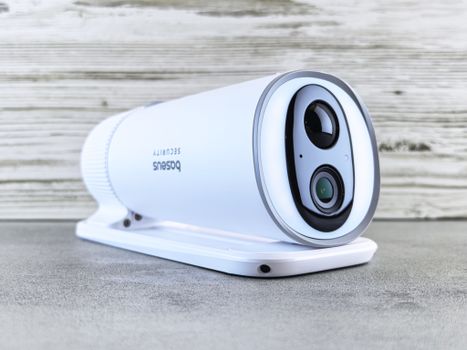
A sleek white security camera with a modern design on a gray surface indoors. Photo: Andrey Matveev / Pexels
Beyond legal compliance, the effectiveness of home security camera systems in Germany hinges on a variety of technical features that cater to the specific needs of homeowners. High-resolution video, ideally 1080p or 4K, is a fundamental requirement. Clear, detailed images are crucial for identification purposes, whether it's recognizing faces or vehicle license plates. Night vision capabilities are equally important, as many incidents occur under the cover of darkness. Look for systems with advanced infrared (IR) LEDs or even color night vision, which can provide clearer images in low-light conditions. Motion detection is another cornerstone feature. Modern systems utilize advanced algorithms, sometimes incorporating AI, to differentiate between human movement, animals, and inanimate objects like swaying branches. This significantly reduces false alarms, ensuring you're only notified when it truly matters. Customizable detection zones allow you to specify particular areas within the camera's view that should trigger an alert, further refining its accuracy. Two-way audio is an increasingly popular feature, enabling you to communicate with visitors or deter intruders remotely. This can be incredibly useful for package deliveries or checking in with family members. For outdoor cameras, weather resistance is non-negotiable. Look for an IP (Ingress Protection) rating of at least IP65, indicating protection against dust and powerful water jets, ensuring durability against Germany's varied weather conditions. Storage options are diverse. Cloud storage offers remote access and redundancy, protecting recordings even if the camera is tampered with. However, it often comes with subscription fees and potential privacy concerns. Local storage, typically via an SD card or Network Video Recorder (NVR), offers greater privacy and no ongoing costs but requires physical access to retrieve footage. Many systems offer a hybrid approach, combining local storage with optional cloud backup. Integration with existing smart home ecosystems (like Amazon Alexa, Google Assistant, or Apple HomeKit) can enhance convenience, allowing for voice control or automated actions. Finally, consider the camera's field of view (FoV). A wider FoV means fewer cameras are needed to cover a large area, but it can also lead to more distortion at the edges. Pan-and-tilt functionality can compensate for a narrower FoV, allowing you to remotely adjust the camera's angle. Evaluating these features against your specific security needs and budget will help you select the most suitable home security camera systems in Germany.

Installation and Maintenance Best Practices for German Homes

Male technician installing solar panel on roof, promoting sustainable energy. Photo: Kindel Media / Pexels
Proper installation and ongoing maintenance are crucial for maximizing the effectiveness and longevity of your home security camera systems in Germany. While many DIY wireless camera systems are designed for easy setup, professional installation can offer significant advantages, especially for wired systems or complex multi-camera setups. Professionals ensure optimal camera placement for maximum coverage and minimal blind spots, adhere to all local building codes, and properly conceal wiring for aesthetics and protection against tampering. For DIY installations, carefully read the manufacturer's instructions. Ensure cameras are mounted securely, especially outdoors, to withstand wind and other elements. When positioning cameras, always keep German privacy laws in mind. Avoid pointing cameras directly at public roads, sidewalks, or neighboring properties. Utilize privacy masking features if your camera's field of view inadvertently captures these areas. Proper network configuration is vital for wireless systems; a strong, stable Wi-Fi signal is essential for reliable streaming and alerts. Consider using Wi-Fi extenders or a mesh network if your home has dead zones. Power supply is another consideration: battery-powered cameras offer flexibility but require regular recharging or battery replacement, while wired cameras provide continuous power but demand more complex installation. Optimizing your smart home security starts with strategic placement. Maintenance is not a one-time task; it's an ongoing commitment. Regularly clean camera lenses to remove dust, dirt, or spiderwebs that can obscure the view. Check for any loose cables or mounting hardware, especially after severe weather. If your system relies on batteries, monitor their charge levels and replace them as needed. Software and firmware updates are critical for security and performance. Manufacturers frequently release updates to patch vulnerabilities, improve features, and enhance stability. Ensure your system is always running the latest version. For systems with local storage (SD cards or NVRs), regularly check the storage capacity and ensure older footage is being overwritten or deleted according to your preferences and legal retention limits. If using cloud storage, review your subscription plan and ensure your internet connection is robust enough to handle continuous uploads. Finally, periodically test your system. Trigger motion alerts to ensure they are working correctly, review live feeds, and check that recordings are being saved as expected. A well-maintained system provides consistent, reliable security, giving you peace of mind.

Choosing the Right Home Security Camera System: Tips & Common Mistakes
White security camera mounted on a pole under a clear blue sky, symbolizing security and surveillance. Photo: Jan van der Wolf / Pexels
Selecting the ideal home security camera system for your German residence involves a blend of research, understanding your specific needs, and avoiding common pitfalls. Here are some tips and mistakes to watch out for: **Tips for Choosing:** * **Prioritize Privacy Features:** Given Germany's strict data laws, prioritize cameras with privacy zones, local storage options, and clear data deletion policies. * **Consider System Scalability:** If you plan to expand your system later, choose a brand or ecosystem that offers a wide range of compatible cameras and accessories. * **Evaluate Connectivity:** For wireless systems, assess your home's Wi-Fi strength. For wired systems, consider the complexity of running cables. * **Read Reviews and Compare:** Look for reviews from other German users to understand real-world performance and compliance experiences. * **Check for Local Support:** Ensure the manufacturer or reseller offers customer support in German and is familiar with local regulations. * **Think About Power Source:** Decide between battery-powered for flexibility or wired for continuous operation and reliability. **Common Mistakes to Avoid:** * **Ignoring German Privacy Laws:** This is the biggest mistake. Assuming international systems are compliant without checking local regulations can lead to legal trouble. * **Overspending on Unnecessary Features:** Don't pay extra for features you won't use. Focus on core functionalities that meet your security needs. * **Underestimating Installation Complexity:** Especially for wired systems, DIY installation can be more challenging than anticipated. Factor in professional installation costs if unsure. * **Neglecting Network Security:** Using weak Wi-Fi passwords or not updating camera firmware leaves your system vulnerable to hacking. * **Poor Camera Placement:** Placing cameras in areas with glare, obstructions, or insufficient lighting will compromise their effectiveness. * **Forgetting About Storage:** Not having a clear plan for video storage (cloud vs. local, retention duration) can lead to lost footage or legal issues. * **Ignoring Weather Ratings:** Using indoor cameras outdoors or outdoor cameras without adequate IP ratings will lead to premature failure in Germany's climate. By carefully considering these points, you can make an informed decision and choose home security camera systems in Germany that provide robust protection while adhering to all necessary legal and practical requirements.

Comparison

FeatureArlo Pro 4Ring Stick Up Cam BatteryReolink Argus 3 ProEufyCam 2 Pro
Resolution2K HDR1080p HD2K 4MP Super HD2K HD
Power SourceBattery (rechargeable)Battery (rechargeable)Battery/SolarBattery (rechargeable)
Local StorageBase station (sold separately)MicroSD cardHomeBase 2 (included)
Cloud StorageSubscription requiredSubscription requiredOptional subscriptionOptional subscription
Night VisionColor Night VisionColor Night VisionColor Night VisionColor Night Vision
Two-Way Audio
Weather RatingIP67IPX5IP65IP67
Privacy Zones

What Readers Say

"I was overwhelmed by the options for home security camera systems in Germany, but this guide helped me choose the perfect Arlo system. The privacy zone feature is essential for my urban apartment, keeping me compliant with local laws."

Anja Schmidt · Munich, Bavaria

"The details on German data protection were incredibly helpful. I opted for a Reolink system with local storage to ensure my data stays private. Setup was straightforward, and the app is very user-friendly."

Thomas Müller · Hamburg, Hamburg

"After reading about the importance of professional installation, I hired a local expert for my EufyCam setup. The system now covers all critical areas without infringing on my neighbors' privacy, giving me complete peace of mind."

Lena Fischer · Berlin, Berlin

"The information on weather resistance was spot on. My first cheap camera failed quickly, but the recommended IP67 rated system has been flawless through several German winters. I just wish the subscription for cloud storage was a bit cheaper."

Kai Richter · Cologne, North Rhine-Westphalia

"As a small business owner, I needed a reliable system for my home office. The guide's emphasis on resolution and night vision led me to a 4K system, which has been crucial for clear identification and monitoring after hours. Highly recommend this advice."

Sophie Weber · Stuttgart, Baden-Württemberg

Frequently Asked Questions

What are the most important legal considerations for home security camera systems in Germany?

The most important legal considerations are adherence to the DSGVO (GDPR) and German data protection laws. You must ensure your cameras do not record public spaces or neighboring properties without explicit consent, use privacy masking features, inform individuals about surveillance with clear signage, and adhere to strict data retention periods, typically only a few days.

Is cloud storage for security camera footage legal in Germany?

Yes, cloud storage is legal in Germany, but it comes with privacy considerations. Ensure the service provider complies with GDPR, preferably stores data within the EU, and has robust security measures. Many prefer local storage via SD cards or NVRs for greater control over their data, avoiding potential cloud privacy issues and recurring subscription fees.

How do I install a home security camera system to comply with German privacy laws?

To comply, carefully plan camera placement to only cover your private property, avoiding public areas like sidewalks or adjacent homes. Utilize privacy zone features to mask out any unavoidable public view. Display clear, visible signs indicating surveillance is active at all entry points. Consult legal guidance if unsure about complex setups.

What is the typical cost range for home security camera systems in Germany?

The cost can vary widely. Basic DIY wireless systems might start from €50-€150 per camera. More advanced systems with features like 4K resolution, AI detection, and local NVR storage can range from €300-€1000+ for a multi-camera setup. Don't forget potential monthly cloud storage subscription fees and professional installation costs, which can add €200-€500+.

Should I choose wired or wireless home security camera systems in Germany?

The choice depends on your property and technical comfort. Wireless systems offer easier installation and flexibility, ideal for renters or smaller homes, but rely on strong Wi-Fi. Wired systems provide superior reliability and consistent power, making them suitable for larger properties or those requiring continuous, tamper-proof recording, though installation is more complex.

Who should consider installing home security camera systems in Germany?

Anyone looking to enhance their property's security, deter potential intruders, monitor their home while away, or keep an eye on children and pets can benefit. They are particularly useful for detached homes, properties in areas with higher crime rates, or those with valuable assets needing protection, provided legal compliance is maintained.

Are there risks to using smart home security cameras regarding cybersecurity?

Yes, there are cybersecurity risks. Weak passwords, outdated firmware, and unencrypted data transmission can make your system vulnerable to hacking. Always use strong, unique passwords, enable two-factor authentication, keep firmware updated, and choose reputable brands with strong encryption protocols to mitigate these risks and protect your privacy.

What are the emerging trends in home security camera systems for the German market?

Emerging trends include more sophisticated AI-powered analytics for better person/object detection, integration with broader smart home ecosystems for automation, increasing emphasis on local edge AI processing for enhanced privacy, and the development of more energy-efficient battery-powered cameras with longer lifespans. German consumers are also showing a growing preference for systems with robust privacy features and local data storage options.

Securing your home in Germany doesn't have to be complicated. By understanding the local regulations and choosing the right home security camera systems, you can create a safe and compliant environment. Take the first step towards ultimate peace of mind today.

Topics: home security camera systems germanysmart home surveillance GermanyCCTV Germany regulationswireless security cameras DEprivacy laws Germany security cameras
Leo List

DK Escorts LU Escorts AT Escorts SE Escorts FI Escorts CH Escorts DE Escorts HR Escorts IE Escorts GR Escorts CZ Escorts NO Escorts BE Escorts FR Escorts SI Escorts IL Escorts NL Escorts PL Escorts HU Escorts ES Escorts IT Escorts PT Escorts SK Escorts RO Escorts ZA Escorts UY Escorts US Escorts UK Escorts NZ Escorts AU Escorts
Brampton weed
Adultwork EstrelaBet Vai de Bet R7 Bet Betão Galera Bet Rainbet Bet9ja Shop SportyBet BetKing Sisal Loto Foot Hollywoodbets YesPlay Odibets RushBet Jugabet BetWarrior BetCity MSport betPawa Fortebet