
How Does Artificial Intelligence Work Simply? Explained!
Unlock the secrets behind AI's magic, breaking down complex concepts into understandable insights for everyone.
Understand AI NowKey Takeaways
- ✓ AI learns from data, identifying patterns to make decisions or predictions.
- ✓ Machine Learning is a core AI subset, enabling systems to improve with experience.
- ✓ Neural Networks, inspired by the human brain, are key to deep learning.
- ✓ AI's capabilities range from simple automation to complex problem-solving.
How It Works
AI systems require vast amounts of data to learn. This data is collected, cleaned, and organized to be in a format the AI can understand and process effectively.
A suitable AI algorithm (e.g., machine learning model) is chosen based on the task. The prepared data is then fed into this algorithm, allowing it to 'learn' by identifying patterns and relationships within the data.
During training, the AI adjusts its internal parameters to minimize errors in its predictions or classifications. It's essentially refining its understanding of the data's underlying structure through iterative feedback.
Once trained, the AI can apply its learned knowledge to new, unseen data to make predictions or decisions. Continuous feedback and new data can further refine its performance over time.
The Core Idea: How AI Mimics Human Intelligence
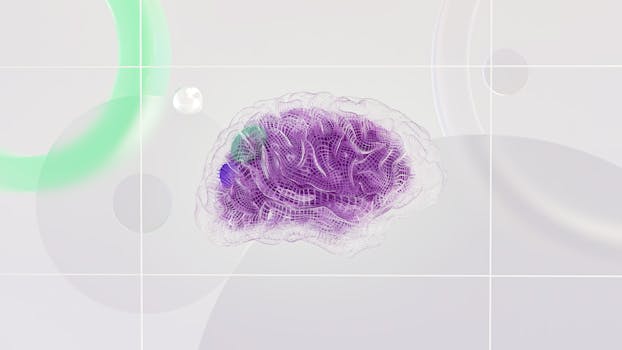 Photo: Google DeepMind / Pexels
Machine Learning: The Engine Behind AI's Prowess
 Photo: Google DeepMind / Pexels
Neural Networks and Deep Learning: AI's Brain-Inspired Revolution
Photo: Google DeepMind / Pexels
Practical Applications and Future Outlook of AI
 Photo: Sanket Mishra / Pexels
Comparison
| Feature | Traditional Programming | Machine Learning (AI) | Deep Learning (Advanced AI) |
|---|---|---|---|
| Learning Method | Explicit rules coded by humans | Learns from data patterns | Learns hierarchical features from data |
| Adaptability | Low (requires manual rule updates) | High (adapts to new data) | Very High (excels with complex, unstructured data) |
| Data Dependency | Low (rules are primary) | High (needs data for training) | Very High (benefits from vast datasets) |
| Complexity Handled | Simple, well-defined tasks | Moderate to complex tasks | Extremely complex, unstructured tasks |
| Human Oversight | High (constant rule management) | Moderate (data labeling, model tuning) | Lower (automatic feature extraction) |
| Example Tasks | Basic calculators, fixed workflows | Spam filters, recommendations | Image recognition, natural language processing |
What Readers Say
"This article truly breaks down how artificial intelligence works simply. I always found AI intimidating, but now I feel like I finally grasp the core concepts. Excellent resource for beginners!"
Anja Schmidt · Berlin, DE"As a medical professional, I needed a clear explanation of AI's fundamentals. This piece delivered, making complex topics accessible and highlighting relevant applications. Very insightful."
Dr. Klaus Müller · Munich, DE"Before reading this, AI was a black box. Now, understanding how artificial intelligence works simply has enabled me to better comprehend its impact on my marketing strategies. A definite game-changer!"
Sophie Weber · Hamburg, DE"The article is very comprehensive and does a great job explaining AI simply. While I wished for a bit more on ethical considerations, the technical explanations were top-notch and easy to follow."
Lukas Becker · Frankfurt, DE"I'm a student in a non-tech field, and this explanation of how artificial intelligence works simply was exactly what I needed for my project. It clarified so much without overwhelming me with jargon."
Maria Meier · Cologne, DEFrequently Asked Questions
What is the most fundamental concept to understand how artificial intelligence works simply?
The most fundamental concept is that AI systems learn from data rather than being explicitly programmed for every scenario. By analyzing vast amounts of information, AI algorithms identify patterns and relationships, enabling them to make predictions or decisions on new, unseen data.
Is AI going to take over all human jobs?
While AI will undoubtedly automate many routine tasks and change job descriptions, it's more likely to augment human capabilities rather than completely replace them. Many roles will evolve to involve collaboration with AI, focusing on creativity, critical thinking, and interpersonal skills that AI currently lacks.
How can I start learning more about AI if I'm a beginner?
Start with online courses on platforms like Coursera or edX focusing on 'AI for Everyone' or 'Machine Learning Basics'. Read introductory books, watch educational YouTube channels, and try simple programming exercises if you're inclined. Focus on understanding the core concepts before diving into complex algorithms.
Is AI expensive to implement for small businesses?
Implementing advanced custom AI solutions can be expensive, but many AI tools are now accessible and affordable for small businesses. Cloud-based AI services, off-the-shelf AI-powered software (like CRM tools with AI features), and readily available APIs can provide significant AI benefits without massive investment.
How is AI different from traditional computer programming?
Traditional programming involves writing explicit, step-by-step instructions for a computer to follow. AI, particularly machine learning, involves training a computer with data so it can learn to identify patterns and make decisions or predictions on its own, without being explicitly told how to handle every possible input.
Who benefits most from understanding how does artificial intelligence work simply?
Everyone can benefit, from students and professionals in non-tech fields to business leaders and policymakers. A basic understanding helps individuals make informed decisions, adapt to changing job markets, leverage AI tools effectively, and contribute to ethical discussions about its development and deployment.
Are there ethical risks associated with AI, even when it works simply?
Yes, even simple AI systems can pose ethical risks. Concerns include bias in algorithms due to biased training data, privacy issues from data collection, job displacement, and the potential for misuse. Responsible AI development emphasizes fairness, transparency, accountability, and privacy-preserving techniques.
What are the next big trends in how artificial intelligence works?
Future trends include advancements in generative AI (creating realistic content), explainable AI (making AI decisions more transparent), federated learning (training AI on decentralized data while preserving privacy), and more sophisticated AI for scientific discovery and complex problem-solving in areas like climate modeling and materials science.
By now, you should have a clear understanding of how artificial intelligence works simply. The power of AI lies in its ability to learn from data, transforming industries and our daily lives. Embrace this knowledge and continue exploring the incredible world of AI to stay ahead in our rapidly evolving technological landscape.