Essential Italy Car Rental Tips for Tourists
Italy car rental tips for tourists

Essential Italy Car Rental Tips for Tourists

Navigate Italy's scenic routes and charming cities with confidence using these crucial car rental insights.

Plan Your Italian Road Trip

Key Takeaways

  • ✓ International Driving Permit (IDP) is legally required for non-EU license holders.
  • ✓ Many historic city centers (ZTLs) are restricted to authorized vehicles; fines are common.
  • ✓ Automatic cars are less common and often more expensive to rent.
  • ✓ Tolls are prevalent on Italian motorways (Autostrade); be prepared for payment.

How It Works

1
Research & Book Early

Compare prices from reputable rental agencies well in advance, especially during peak season. Booking early often secures better rates and a wider selection of vehicles.

2
Understand Requirements

Ensure you have all necessary documents, including an IDP, valid driver's license, and credit card. Be aware of age restrictions and potential young driver fees.

3
Inspect Vehicle Thoroughly

Before leaving the lot, meticulously check for existing damage and photograph everything. This prevents disputes over new damage upon return.

4
Familiarize with Local Rules

Study Italian road signs, speed limits, and ZTL regulations before driving. Knowing these rules will prevent costly fines and ensure a smoother journey.

Navigating the Italian Rental Landscape: What You Need to Know
Stunning aerial view of Alba's rural landscape in Piemonte, Italy at sunset. Photo: K / Pexels
Renting a car in Italy promises an unparalleled sense of freedom, allowing you to explore the rolling Tuscan hills, the dramatic Amalfi Coast, or the hidden gems of Puglia at your own pace. However, the process comes with its own set of nuances that can trip up even the most seasoned traveler. Understanding the Italian car rental landscape before you arrive is paramount to a stress-free experience. First and foremost, the legal requirements for driving in Italy are strict. If you hold a driver's license from a non-EU country, an International Driving Permit (IDP) is not just recommended, it's a legal obligation. This document, which is essentially a translation of your existing license, must be presented alongside your national license. Failure to produce an IDP can result in significant fines and even refusal of your rental car. Obtaining an IDP is usually a straightforward process through your local automobile association, so plan ahead and secure yours before your trip. Another critical aspect is the type of vehicle. While automatic cars are standard in many countries, manual transmission vehicles dominate the rental fleets in Italy. If you're not proficient with a stick shift, be sure to specifically request and confirm an automatic vehicle during booking. Be prepared to pay a premium for automatics, and note that their availability can be limited, especially in smaller rental locations or during high season. Early booking is particularly crucial if an automatic is a must-have for your journey. Consider the size of the car as well. While a larger vehicle might seem more comfortable, navigating Italy's narrow, winding roads and tight city streets often calls for a compact car. Smaller cars are also easier to park, a significant advantage in crowded Italian towns. Insurance is another area where careful attention is needed. Basic third-party liability insurance is typically included in your rental, but this often provides minimal coverage. Rental agencies will offer various additional insurance options, such as Collision Damage Waiver (CDW) and Theft Protection (TP), often with a high deductible (excess). It's crucial to understand what these cover and what your liability is. Many travelers opt for full coverage or zero-excess policies for peace of mind, though these come at an additional cost. Alternatively, some credit cards offer car rental insurance benefits; check with your card provider before you travel to see if you're covered and what documentation you might need to present to the rental company. Be wary of high-pressure sales tactics at the counter to upsell you on insurance you may not need or already have. For more detailed information on travel insurance, consider visiting this guide on comprehensive travel coverage. Always read the fine print of your rental agreement regarding insurance and deductibles. Being informed can save you hundreds, if not thousands, of euros in potential charges. Finally, familiarize yourself with fuel policies. Most rentals come with a 'full-to-full' policy, meaning you pick up the car with a full tank and return it full. Deviations can incur hefty refueling charges.

Mastering Italian Road Rules and Driving Etiquette
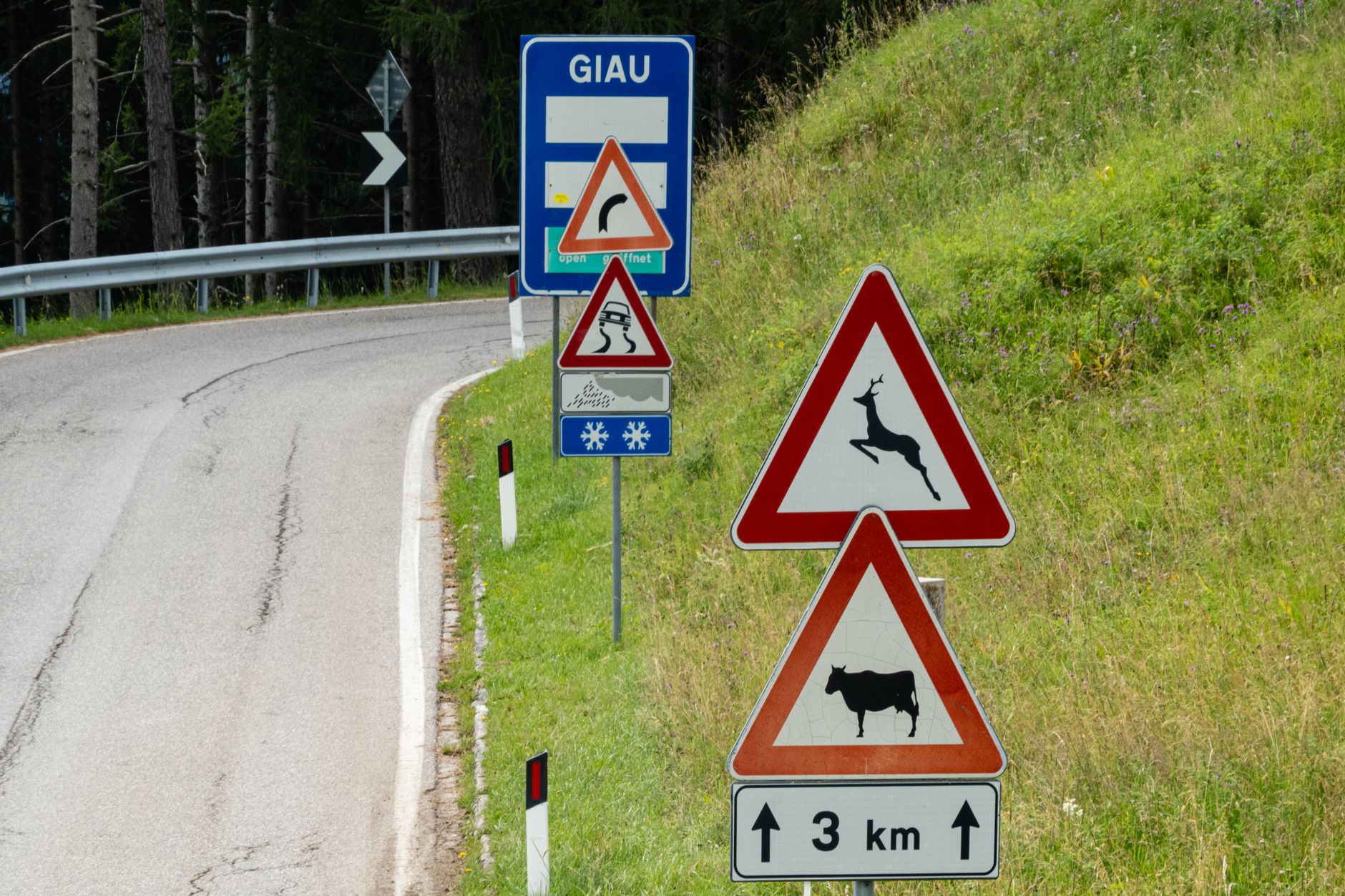
Mountain road signs near Giau Pass indicating potential hazards including wildlife. Scenic summer view. Photo: Jose Rodriguez Ortega / Pexels
Driving in Italy is an experience in itself, often described as lively and dynamic. To ensure your safety and avoid unwanted penalties, a solid grasp of local road rules and driving etiquette is essential. The most infamous and critical rule to understand is the Zona a Traffico Limitato, or ZTL. These are restricted traffic zones, typically found in historic city centers, where access is limited to authorized vehicles (residents, public transport, delivery vehicles) during specific hours. ZTLs are enforced by cameras that automatically photograph license plates. Drive into one unknowingly, and you'll receive a fine, often weeks or months after your trip, for every entry. These fines can accumulate rapidly, making a brief excursion into a ZTL a very expensive mistake. Always look for the white circular sign with a red border, often accompanied by text indicating the active hours. If you're staying within a ZTL, your hotel may be able to register your vehicle, but always confirm this in advance. Parking outside ZTLs and walking or using public transport is often the best strategy for city visits. Speed limits in Italy are generally 50 km/h in urban areas, 90-110 km/h on non-urban main roads, and 130 km/h on motorways (Autostrade). Speed cameras are common and often well-marked, but it's crucial to pay attention to signage. Fines for speeding can be substantial. Keep your headlights on at all times, even during the day, on motorways and non-urban roads. This is a legal requirement. Roundabouts are common in Italy, and the general rule is to give way to traffic already on the roundabout, though some older roundabouts may have different signage. Always be prepared for assertive driving. Italian drivers can be quick to overtake and may use their horn more frequently than you're accustomed to. This is often not an act of aggression but simply a way of communicating presence. Maintain a defensive driving posture and stay alert. Parking can be a challenge, especially in popular towns and cities. Parking spaces are color-coded: white lines usually indicate free parking (though often limited in duration), blue lines mean paid parking (look for a 'Parcheggio' sign and a parking meter), and yellow lines are reserved for residents or disabled drivers. Parking in yellow zones will result in a fine or even towing. Always check signage carefully for parking restrictions and payment instructions. Many towns also have underground parking garages, which can be a convenient (though often more expensive) option. Finally, tolls. Most of Italy's excellent motorway network is tolled. When you enter a motorway, you'll typically take a ticket from a machine. When you exit, you'll insert the ticket and pay the displayed amount. Payment options usually include cash, credit/debit card, or the Telepass system (an electronic toll collection device). Look for lanes clearly marked for 'Carte' (cards) or 'Contanti' (cash). Avoid the 'Telepass' lanes unless your rental car is equipped with one, as driving through without a transponder will lead to a fine. Having small euro denominations for tolls is always a good idea, as card readers can sometimes be finicky. Understanding these rules will significantly enhance your driving experience and help you avoid unnecessary stress and costs.

For more options, check out Noleggio auto in Italia.

Essential Apps and Tech Tools for Your Italian Road Trip
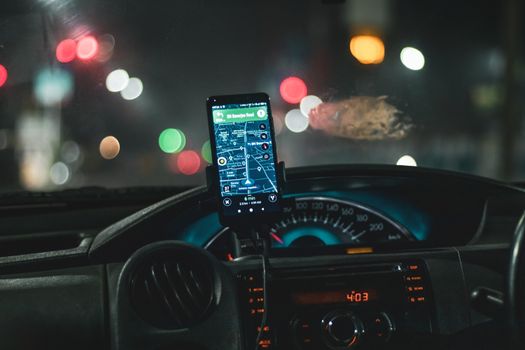
Close-up of a smartphone with map navigation in a car at night with bokeh effect. Photo: Rahul Pandit / Pexels
In today's digital age, technology can be your best friend when navigating a foreign country. For an Italian road trip, a suite of reliable apps and tech tools can make all the difference, transforming potential frustrations into smooth sailing. Foremost among these is a robust navigation app. While your rental car might have a built-in GPS, relying on your smartphone's navigation is often more up-to-date and user-friendly. Google Maps, Waze, and Apple Maps are excellent choices, offering real-time traffic updates, estimated travel times, and detailed turn-by-turn directions. Crucially, many of these apps allow you to download maps for offline use, which is invaluable in areas with spotty cell service. This ensures you won't get lost even if you lose your signal in a remote mountain pass or a quaint village. Beyond navigation, several apps can help with parking. Apps like EasyPark or Parkopedia can help you locate available parking spots, understand parking regulations, and even pay for parking directly from your phone in many Italian cities. This eliminates the need to fumble for coins or decipher unfamiliar parking meters. Having a good data plan or a local SIM card is highly recommended to leverage these real-time services. Consider purchasing an eSIM before you leave or a physical SIM card upon arrival for affordable data access throughout your trip. For more insights on digital preparedness, check out our guide on essential travel tech for international journeys. Language translation apps are another must-have. While many Italians in tourist areas speak English, having Google Translate or a similar app can bridge communication gaps, especially when dealing with rental agents, gas station attendants, or asking for directions in less-trafficked regions. The ability to translate signs or even have a real-time conversation can significantly enhance your experience. For tolls, while not an app, understanding the Telepass system is beneficial. Some premium rental cars might come equipped with a Telepass device, allowing you to breeze through toll booths without stopping. If your car has one, confirm with the rental agency how the charges are handled. Otherwise, as mentioned, be prepared with cash and cards. Finally, consider a reliable music streaming service or downloaded playlists to keep you entertained on longer drives. Italian radio can be a fun cultural experience, but having your own music provides a familiar soundtrack to your adventure. A portable power bank for your phone is also a small but mighty tool, ensuring your navigation and communication devices stay charged throughout your day's explorations. With the right tech, your Italian road trip will be not only memorable but also remarkably efficient and enjoyable.

Common Pitfalls and Proactive Solutions for Renting a Car in Italy

Even with meticulous planning, pitfalls can arise when renting a car in Italy. Being aware of these common issues and having proactive solutions can save you significant headaches and expenses. **Common Pitfalls:** * **Unforeseen ZTL Fines:** The most frequent and frustrating issue. Tourists often drive into ZTLs without realizing, accumulating multiple fines. * **Unexpected Damage Charges:** Disputes upon return about pre-existing damage that wasn't noted at pick-up. * **Fuel Policy Mishaps:** Returning a car with less fuel than required, leading to exorbitant refueling fees. * **High Deductibles/Excess:** Not understanding your insurance coverage, leading to large out-of-pocket expenses for minor damages. * **Lack of IDP:** Being denied a car or fined by police for not having a legally required International Driving Permit. * **Navigating Narrow Streets:** Underestimating the challenge of driving and parking larger vehicles in historic centers. * **Roadside Assistance Issues:** Not knowing who to call or what to do in case of a breakdown or accident. * **Toll Lane Mistakes:** Entering a Telepass lane without the device, causing delays or fines. **Proactive Solutions:** 1. **ZTL Awareness:** Always look for ZTL signs. If you're unsure, park outside the city center and walk or use public transport. Use navigation apps that highlight ZTLs (Waze is often good for this). Ask your hotel if they can register your plate if you must enter their ZTL. 2. **Thorough Vehicle Inspection:** Before driving off, take photos and a video of every inch of the car, inside and out. Document any existing scratches, dents, or interior damage. Point these out to the rental agent and ensure they are noted on your rental agreement. Keep these records until you receive your final billing. 3. **Understand Fuel Policy:** Opt for 'full-to-full' and plan your return to allow time for refueling near the drop-off location. Keep your fuel receipt as proof. 4. **Review Insurance:** Carefully read your rental agreement's insurance section. Consider purchasing full coverage with zero excess, either from the rental company, a third-party insurer, or through your credit card benefits, to avoid large deductibles. 5. **Obtain IDP:** Get your IDP before you leave your home country. It's a simple process and legally required for non-EU license holders. 6. **Choose Wisely:** Select a compact car for easier maneuverability and parking. Practice driving a manual if you're not confident, or ensure you book an automatic well in advance. 7. **Know Your Emergency Contacts:** Keep the rental company's roadside assistance number and your insurance provider's contact details readily accessible. In case of an accident, call the local emergency number (112) first. 8. **Toll Lane Vigilance:** Pay close attention to toll booth signage. Stick to lanes marked 'Carte' (cards) or 'Contanti' (cash) unless you are absolutely sure your car has a Telepass device. By anticipating these common issues and implementing these proactive steps, your Italian car rental experience can be smooth, enjoyable, and free from unexpected costs.

Comparison

FeatureRental Company (Direct)Third-Party BrokerCredit Card Insurance
Booking FlexibilityGoodExcellent (often cheaper)N/A
Insurance CoverageVariable, often expensiveOften offers cheaper full coverageSupplemental, check terms
Vehicle ChoiceDirect access to full fleetMay have limited optionsN/A
Roadside AssistanceIncludedIncluded (via rental company)Separate, may require upfront payment
Hidden FeesPossible (e.g., fuel, added drivers)Less common, but read fine printN/A
Dispute ResolutionDirectBroker can mediateDirect with card provider
IDP Requirement
ZTL GuidanceLimitedLimitedLimited

What Readers Say

"These Italy car rental tips for tourists saved our trip! We avoided ZTL fines and knew exactly what to look for with insurance. The advice on compact cars was spot on for Siena."

Anja M. · Berlin, Germany

"The guide on IDPs and thorough vehicle inspection was invaluable. We documented everything and had no issues returning our car. A truly comprehensive resource."

Thomas K. · Hamburg, Germany

"Following these tips, we managed to navigate the Amalfi Coast confidently and even found easy parking. The tech tool suggestions made our journey so much smoother, especially Google Maps offline."

Sofia L. · Munich, Germany

"Mostly excellent advice, though I wish there was a bit more on specific regional driving quirks. Still, the ZTL warnings alone made it worth reading, preventing several potential fines."

Max P. · Cologne, Germany

"As a first-time driver in Italy, I was nervous. This article provided clear, actionable Italy car rental tips for tourists that built my confidence. We had a fantastic, worry-free journey from Rome to Florence."

Lena R. · Stuttgart, Germany

Frequently Asked Questions

Is an International Driving Permit (IDP) really necessary for car rental in Italy?

Yes, absolutely. For non-EU license holders, an IDP is a legal requirement in Italy. It serves as an official translation of your national driver's license and must be carried alongside it. Failure to present an IDP can result in significant fines and may even lead to rental companies refusing to release the vehicle.

How can I avoid ZTL (Limited Traffic Zone) fines in Italian cities?

The best way to avoid ZTL fines is to be constantly vigilant for the ZTL signs (a white circle with a red border). If you see one, do not enter. Park outside the historic centers and use public transport or walk. If your hotel is located within a ZTL, contact them in advance to see if they can register your car's license plate for temporary access.

What's the best approach to car rental insurance in Italy?

Basic third-party liability is usually included, but it offers minimal protection. It's highly recommended to secure comprehensive coverage, such as a Collision Damage Waiver (CDW) and Theft Protection (TP), ideally with zero excess. You can purchase this through the rental company, a third-party insurer, or check if your credit card offers suitable car rental insurance benefits.

Are automatic transmission cars common or more expensive to rent in Italy?

Automatic transmission cars are less common in Italy compared to manual (stick shift) vehicles. They are generally more expensive to rent and have limited availability, especially in smaller rental locations or during peak tourist seasons. If you require an automatic, it is crucial to book well in advance and confirm your reservation.

Should I book my car rental directly with a company or through a third-party broker?

Both options have pros and cons. Third-party brokers (like Rentalcars.com, Kayak) often offer competitive prices and bundled insurance options. Direct bookings with rental companies (Hertz, Avis, Europcar) might offer more choice of specific models and easier direct communication if issues arise. Compare prices and read reviews for both before deciding.

Who should consider renting a car for their Italian vacation?

Renting a car in Italy is ideal for travelers who want to explore rural areas, small towns, vineyards, or the countryside beyond major city centers. It offers flexibility for multi-destination road trips and allows you to reach places not easily accessible by public transport. If your trip focuses solely on major cities like Rome, Florence, or Venice, a car might be more of a hindrance due to ZTLs and parking challenges.

What should I do if I have a breakdown or accident with my rental car in Italy?

In case of a breakdown, contact your rental company's roadside assistance immediately (keep their number handy). For an accident, ensure everyone's safety, call the local emergency number (112), and then notify your rental company and insurance provider. Document everything with photos and get details from other parties involved.

Will electric vehicles (EVs) be a viable option for car rentals in Italy soon?

While Italy's charging infrastructure is growing, it's not as extensive as in some other European countries, especially outside major cities. EVs are becoming more available for rental, but for longer road trips, a traditional petrol or diesel car might still offer more peace of mind regarding range and charging accessibility. Always research charging points along your planned route if considering an EV.

Armed with these comprehensive Italy car rental tips for tourists, you're now ready to embark on an unforgettable adventure. Plan wisely, drive safely, and let the open roads of Italy lead you to incredible discoveries. Start planning your Italian road trip today!

Topics: Italy car rental tips for touristsrenting a car in Italydriving in ItalyItalian road rulescar hire Italy advice
Leo List
Brampton weed
Adultwork