✓ 5G is the fifth generation of cellular technology, offering significantly higher speeds and lower latency than 4G.
✓ It utilizes a combination of spectrum bands (low, mid, high) to deliver diverse performance characteristics.
✓ Key enhancements include enhanced Mobile Broadband (eMBB), Ultra-Reliable Low-Latency Communications (URLLC), and Massive Machine-Type Communications (mMTC).
✓ 5G's deployment in Germany is rapidly expanding, promising to transform industries from automotive to healthcare.
How It Works
1
New Radio (NR) Interface
5G introduces a new radio interface, 5G NR, designed for higher frequencies and more efficient use of the radio spectrum. This allows for increased data capacity and faster transmission speeds.
2
Massive MIMO Antennas
Massive Multiple-Input, Multiple-Output (MIMO) technology uses many more antennas at the base station than 4G. This enables simultaneous communication with multiple users and devices, greatly improving network capacity and efficiency.
3
Beamforming & Millimeter Wave
Beamforming focuses radio signals directly at user devices, enhancing signal strength and reducing interference. Millimeter wave (mmWave) spectrum, while having a shorter range, offers extremely high bandwidth for blazing-fast speeds in dense areas.
4
Network Slicing & Edge Computing
Network slicing allows operators to create virtual, customized networks for specific applications, optimizing performance for diverse needs. Edge computing brings data processing closer to the user, significantly reducing latency for critical applications.
Understanding the Core Tenets of 5G Connectivity
Photo: Qeis Ismail / Pexels
The advent of 5G technology marks a pivotal moment in the evolution of wireless communication, promising to redefine how we interact with the digital world. To truly grasp what is 5G technology explained, we must first delve into its fundamental principles and the foundational changes it brings compared to its predecessors. At its heart, 5G is not merely a faster version of 4G; it's a completely new architecture designed to support an unprecedented scale of connected devices and a vast array of new applications. It stands on three primary pillars: enhanced Mobile Broadband (eMBB), Ultra-Reliable Low-Latency Communications (URLLC), and Massive Machine-Type Communications (mMTC). Each of these pillars addresses distinct needs and collectively forms the robust framework that 5G offers. Enhanced Mobile Broadband focuses on delivering significantly higher speeds and greater capacity, making activities like streaming 8K video, augmented reality (AR), and virtual reality (VR) seamless and commonplace. Imagine downloading a full-length high-definition movie in mere seconds – that's the promise of eMBB. This capability is crucial for supporting the ever-increasing demand for data-intensive applications and services, especially in densely populated urban areas across Germany and beyond. The second pillar, Ultra-Reliable Low-Latency Communications, is perhaps the most revolutionary. It aims to achieve latencies as low as one millisecond, a speed that is virtually imperceptible to humans. This ultra-low latency is critical for applications where immediate response is paramount, such as autonomous vehicles, remote surgery, industrial automation, and smart grid management. The ability for devices to communicate and react in near real-time opens up entirely new paradigms for safety, efficiency, and control. For instance, in an autonomous car, a millisecond delay could be the difference between avoiding an accident and not. The third pillar, Massive Machine-Type Communications, is designed to connect an enormous number of devices simultaneously. This is the bedrock of the Internet of Things (IoT), enabling billions of sensors, smart devices, and machines to communicate with each other efficiently and with minimal power consumption. From smart cities monitoring air quality and traffic flow to smart homes managing energy consumption and security, mMTC provides the backbone for a truly interconnected world. This capacity to handle vast numbers of low-power devices is essential for scaling IoT deployments without overwhelming the network. Furthermore, 5G leverages advanced technologies such as millimeter wave (mmWave) frequencies, Massive MIMO (Multiple-Input, Multiple-Output) antennas, and beamforming. Millimeter wave, while having a shorter range, offers immense bandwidth for incredibly fast speeds in localized areas. Massive MIMO uses an array of many antennas to send and receive more data simultaneously, improving network capacity and efficiency. Beamforming directs radio signals precisely to where they are needed, reducing interference and improving signal quality. These innovations, combined with network slicing – a technique that allows network operators to create multiple virtual networks on top of a single physical infrastructure, each tailored for specific service requirements – represent a monumental leap forward. Understanding these core tenets is key to appreciating the transformative potential of 5G across all sectors of society. Learn more about the latest advancements in telecommunications infrastructure.
The Transformative Impact and Benefits of 5G in Germany
Photo: Qeis Ismail / Pexels
The rollout of 5G technology in Germany is not just an incremental upgrade; it's a foundational shift poised to revolutionize various aspects of daily life and industry. When we discuss what is 5G technology explained in the context of its benefits, we're talking about a paradigm shift in how data is transmitted, processed, and utilized. The most immediate and noticeable benefit for consumers is the sheer speed. With theoretical peak speeds of up to 10 gigabits per second (Gbps), 5G offers downloads and streaming capabilities far beyond anything 4G could deliver. This means instantaneous downloads of large files, buffer-free 4K/8K video streaming, and incredibly smooth online gaming experiences. For mobile users in Germany, this translates to less waiting and more doing, whether they are in a crowded city center or on the go. Beyond raw speed, the ultra-low latency of 5G will unlock applications that were previously impossible. Imagine remote surgery where a surgeon can operate on a patient located hundreds of kilometers away with virtually no delay, guided by haptic feedback. This level of precision and responsiveness will transform healthcare, making specialized medical care more accessible and efficient. In the automotive industry, 5G is the cornerstone for truly autonomous driving. Vehicles will be able to communicate with each other (V2V), with infrastructure (V2I), and with the network (V2N) in real-time, enabling safer roads, optimized traffic flow, and potentially eliminating human error. German car manufacturers are heavily investing in 5G research to lead this global transformation. The industrial sector, particularly Germany's robust manufacturing industry, stands to gain immensely from 5G's capabilities. Smart factories, powered by 5G, will feature highly automated processes, real-time monitoring of machinery, and predictive maintenance. This will lead to increased efficiency, reduced downtime, and significant cost savings. The ability to connect thousands of sensors and actuators wirelessly with ultra-reliability and low latency will enable entirely new levels of automation and control, fostering the Industry 4.0 vision. Furthermore, 5G will accelerate the development of smart cities. From intelligent traffic management systems that adapt to real-time conditions, to connected public transport, and smart waste management, 5G provides the necessary infrastructure for urban environments to become more efficient, sustainable, and responsive to the needs of their citizens. Emergency services will also benefit from enhanced communication capabilities, faster data transmission from incident scenes, and better coordination. The economic impact of 5G in Germany is projected to be substantial. It will foster innovation, create new jobs, and enhance the country's competitive edge in the global digital economy. New business models will emerge, driven by the unique capabilities of 5G, from specialized IoT services to advanced AR/VR applications for training and entertainment. The infrastructure build-out itself represents a significant investment, stimulating economic activity and bringing advanced connectivity to more regions. However, realizing these benefits requires continuous investment in infrastructure and a collaborative effort between government, industry, and academia. The transformative potential of 5G is vast and will touch nearly every facet of modern life, propelling Germany into a new era of digital innovation and connectivity.
Navigating the Challenges and Future of 5G Deployment
Photo: Qeis Ismail / Pexels
While the promise of what is 5G technology explained is immense, its widespread deployment and full realization of its potential come with a unique set of challenges. Understanding these hurdles is crucial for assessing the realistic timeline and impact of 5G, particularly in a technologically advanced nation like Germany. One of the primary challenges is the significant infrastructure investment required. 5G networks, especially those leveraging higher frequency millimeter wave (mmWave) bands for ultra-fast speeds, require a much denser network of small cells compared to 4G. These small cells need to be deployed closer to users, often on streetlights, buildings, and other urban furniture, which involves complex planning, permitting, and construction. This 'densification' is costly and time-consuming, requiring cooperation from local authorities and property owners. The sheer scale of this build-out is a major undertaking for telecommunication providers in Germany. Another challenge revolves around spectrum allocation and availability. 5G operates across a wide range of frequencies, from low-band (similar to 4G, good for coverage) to mid-band (balancing speed and coverage) and high-band (mmWave, for extreme speeds in small areas). Ensuring sufficient and contiguous spectrum is available for all operators is vital for optimal 5G performance. Regulatory frameworks need to be agile to facilitate efficient spectrum auctions and usage, allowing providers to innovate and expand their networks effectively. Security concerns also loom large. As 5G connects an unprecedented number of devices and critical infrastructure, the attack surface for cyber threats expands significantly. Protecting sensitive data, ensuring network integrity, and safeguarding against potential espionage or sabotage are paramount. Germany, with its strong data protection laws, is particularly sensitive to these issues, and robust security protocols must be embedded at every layer of the 5G architecture. The integration of 5G with existing 4G infrastructure is another complex task. While 5G New Radio (NR) is a new air interface, initial deployments often rely on the existing 4G core network (Non-Standalone 5G). The transition to a fully standalone (SA) 5G network, with its own dedicated 5G core, is essential to unlock the full potential of URLLC and mMTC, but this transition requires significant software upgrades and network re-architecting. Public perception and potential health concerns, though largely unsubstantiated by scientific consensus, can also pose deployment challenges. Addressing these concerns through clear communication and educational initiatives is important to foster public acceptance and avoid delays in rollout. Looking ahead, the future of 5G in Germany is bright, despite these challenges. Continued investment, technological advancements, and collaborative efforts will gradually overcome these hurdles. We can expect to see an increasing proliferation of 5G-enabled devices, more sophisticated IoT applications, and a deeper integration of 5G into industrial processes and smart city initiatives. The evolution of 5G will also include advancements like 5G-Advanced and eventually 6G, pushing the boundaries of connectivity even further. The focus will shift from initial deployment to optimizing performance, developing new services, and creating innovative business models that fully leverage the capabilities of this transformative technology. Germany is well-positioned to be a leader in this transition, given its strong industrial base and commitment to technological advancement. Discover the latest trends in network security and digital infrastructure.
Maximizing Your 5G Experience: Tips and Common Misconceptions
Photo: Towfiqu barbhuiya / Pexels
To truly benefit from what is 5G technology explained, it’s important for users in Germany to understand how to maximize their experience and debunk common misconceptions. 5G isn't a magical switch that instantly makes everything faster; it requires certain conditions and user awareness to deliver its full potential. Here are some tips and common pitfalls to avoid:
**Tips for a Better 5G Experience:**
* **Ensure You Have a 5G-Compatible Device:** This might seem obvious, but many users expect 5G speeds on older phones. You need a device explicitly designed for 5G to access the network. Check your phone's specifications.
* **Verify 5G Coverage in Your Area:** While 5G rollout in Germany is progressing rapidly, coverage is still not ubiquitous. Use your provider's coverage maps to confirm 5G availability in the locations you frequent. If you're outside a 5G area, your phone will seamlessly switch to 4G.
* **Update Your Device Software:** Manufacturers frequently release software updates that optimize 5G performance, improve battery life when using 5G, and patch security vulnerabilities. Keep your operating system and apps up to date.
* **Check Your Data Plan:** To fully enjoy the high speeds of 5G, you'll likely consume more data. Ensure your mobile data plan is adequate for your usage habits, or consider an unlimited data plan if available from your German provider.
* **Understand Different 5G Bands:** Not all 5G is created equal. Low-band 5G offers wider coverage but speeds closer to 4G. Mid-band 5G provides a good balance of speed and coverage. Millimeter-wave (mmWave) 5G offers incredibly fast speeds but has very limited range and struggles with obstacles. Your device will automatically connect to the best available band, but understanding this can help manage expectations.
**Common Misconceptions About 5G:**
* **Misconception 1: 5G is only about faster downloads.** While speed is a major component, 5G's true power lies in its low latency and massive capacity, enabling revolutionary applications like autonomous vehicles, remote surgery, and advanced IoT that go far beyond simple data transfer.
* **Misconception 2: 5G is a health risk.** Extensive research by numerous scientific bodies, including the World Health Organization (WHO), has found no conclusive evidence that 5G radio waves are harmful to human health. 5G operates within safe, regulated frequency bands.
* **Misconception 3: My 4G phone will get 5G speeds in a 5G area.** As mentioned, a 5G-compatible device is essential. Your 4G phone will only ever connect to 4G networks, regardless of 5G availability.
* **Misconception 4: 5G instantly replaces Wi-Fi.** While 5G can offer comparable or even superior speeds to some home Wi-Fi networks, it's more likely to complement it. 5G home internet is an emerging option, but for many, a fixed-line broadband connection will remain the primary internet source indoors, with 5G providing superior mobile connectivity.
By being informed, users can navigate the evolving 5G landscape effectively and harness its full potential for both personal and professional use in Germany.
Comparison
Feature
5G (Best Option)
4G LTE (Alternative 1)
Wi-Fi 6 (Alternative 2)
Peak Speed (Theoretical)
10 Gbps
100 Mbps - 1 Gbps
9.6 Gbps
Latency (Typical)
1 ms - 5 ms
20 ms - 50 ms
2 ms - 10 ms (local)
Connected Devices (Density)
✓ (Massive)
✗ (Limited)
✓ (High)
Mobility
Full Mobility
High Mobility
Stationary/Limited
What Our Readers Say
5★★★★★
"Understanding what is 5G technology explained felt overwhelming, but this article broke it down perfectly. My new 5G phone now makes sense, and I'm seeing incredible speeds, especially in the city center. Downloads are instantaneous!"
Anja M.Berlin, Germany
5★★★★★
"As an engineer, I appreciate the depth of this explanation. The details on network slicing and mMTC really clarified 5G's industrial potential beyond just faster streaming. It's truly a game-changer for Industry 4.0."
Lukas H.Munich, Germany
5★★★★★
"Before reading this, I thought 5G was just marketing hype. Now I understand the low latency benefits for things like remote work and smart homes. My smart devices respond noticeably faster since I got a 5G router."
Sophie K.Hamburg, Germany
4★★★★☆
"The article is very informative, though I still find 5G coverage a bit spotty outside major cities in Germany. When I do get a strong 5G signal, the performance is stellar, but consistency is key for me."
Thomas R.Frankfurt, Germany
5★★★★★
"My son is a huge online gamer, and this explanation of 5G's low latency really resonated. He's experiencing much less lag now, which has improved his gaming experience significantly. Highly recommend for understanding the practical impact."
Elena P.Stuttgart, Germany
Frequently Asked Questions
What is the main difference between 5G and 4G?
The main differences are significantly higher speeds (up to 100x faster than 4G), much lower latency (around 1ms compared to 20-50ms for 4G), and a much greater capacity to connect a massive number of devices simultaneously. These combined capabilities enable new applications that 4G cannot support.
Is 5G technology safe for health?
Leading scientific organizations, including the World Health Organization (WHO) and the German Federal Office for Radiation Protection (BfS), have stated that there is no conclusive scientific evidence that 5G radio waves, operating within international safety guidelines, are harmful to human health. 5G operates on frequencies that have been safely used for decades.
How can I get 5G in Germany?
To get 5G in Germany, you need a 5G-compatible smartphone or device, a 5G-enabled mobile data plan from a German network provider (like Deutsche Telekom, Vodafone, or O2), and to be in an area with 5G coverage. Check your provider's coverage map for availability.
Is 5G more expensive than 4G?
Initially, 5G data plans might have been slightly more expensive or offered as premium tiers. However, as 5G deployment expands and becomes more common, the price difference is diminishing. Many providers now offer 5G access as standard with their regular data plans, though higher data allowances to fully utilize 5G speeds might incur additional costs.
How does 5G compare to home Wi-Fi?
5G offers comparable or even superior speeds to many home Wi-Fi networks, especially in areas with strong 5G coverage. However, Wi-Fi is generally more cost-effective for stationary indoor use with multiple devices. 5G also offers mobility that Wi-Fi cannot, making it ideal for on-the-go connectivity. Some homes can use 5G as a primary home internet connection (5G FWA).
Who should use 5G technology?
Anyone seeking faster internet speeds, lower latency for gaming or real-time applications, or those wanting to prepare for future smart home/city and IoT technologies will benefit from 5G. It's especially useful for professionals needing high-speed mobile connectivity, and industries looking to implement advanced automation and remote operations.
Are there any privacy risks associated with 5G?
Like any advanced network technology, 5G introduces new privacy considerations due to the vast increase in connected devices and data flow. However, 5G standards include enhanced security features compared to previous generations. Reputable network providers and device manufacturers implement robust encryption and security protocols to protect user data, but users should always practice good digital hygiene.
What is the future outlook for 5G in Germany?
The future of 5G in Germany is very promising. Continued expansion of coverage, especially in rural areas, is expected. We will see greater integration of 5G into industrial applications (Industry 4.0), smart city initiatives, and the automotive sector. Future evolutions like 5G-Advanced and eventually 6G will further push the boundaries of connectivity, enabling even more immersive and intelligent digital experiences across the country.
Now that you have a comprehensive understanding of what is 5G technology explained, it's time to experience its potential firsthand. Explore 5G-enabled devices and plans from your local German providers to step into the future of connectivity today.
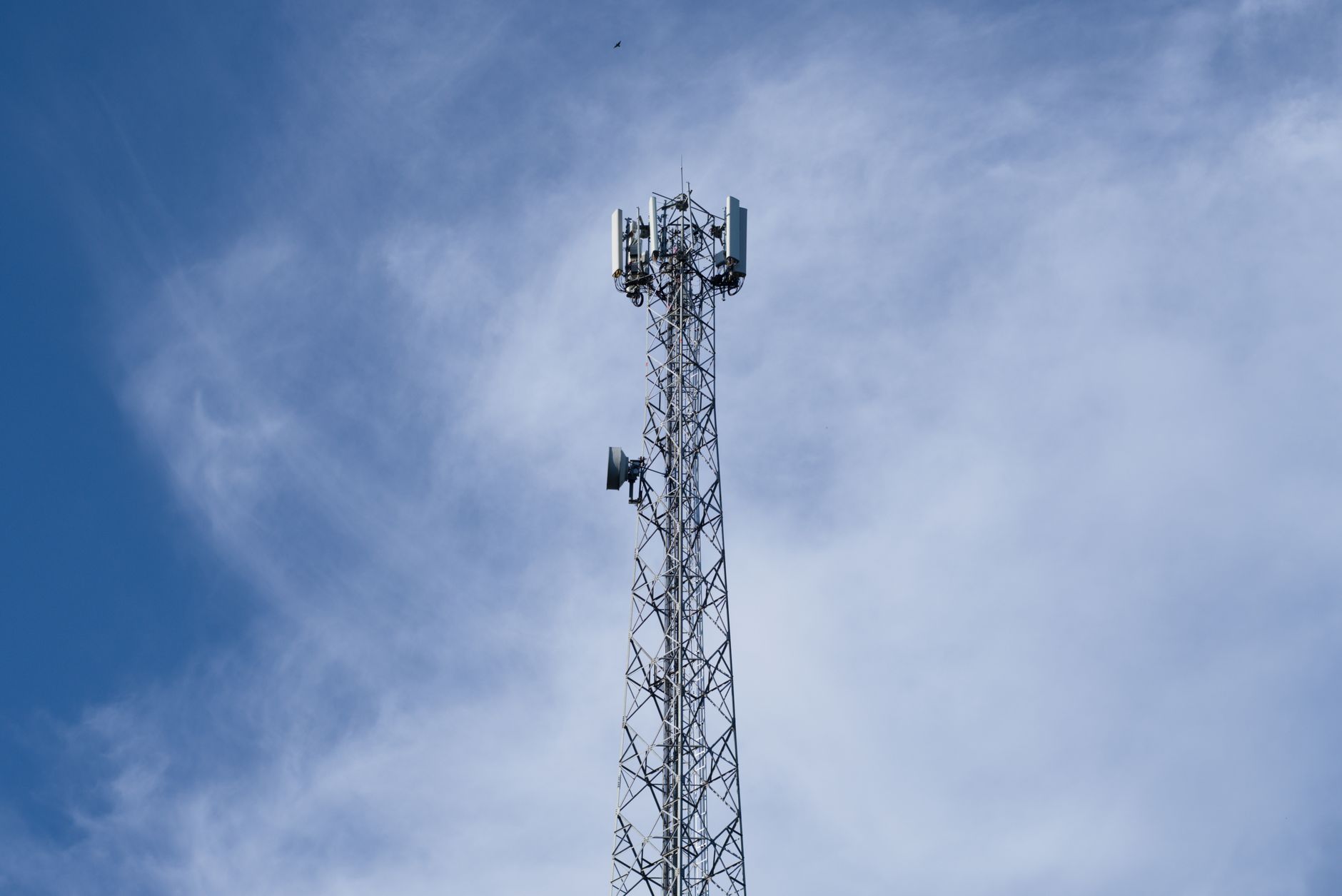
 Photo: Qeis Ismail / Pexels
 Photo: Towfiqu barbhuiya / Pexels