✓ It requires a VR headset and often motion controllers for interaction.
✓ VR gaming encompasses diverse genres, from simulations to action-adventure.
✓ Haptic feedback and spatial audio enhance the sense of presence in VR worlds.
How It Works
1
Wear the Headset
A VR headset, like an Oculus Quest or Valve Index, is worn over your eyes. It houses displays that show separate images to each eye, creating a stereoscopic 3D effect.
2
Track Your Movement
Sensors within the headset and/or external base stations track your head and body movements. This allows your in-game perspective to change naturally as you move in the real world.
3
Interact with Controllers
Handheld controllers, often equipped with haptic feedback, translate your real-world hand movements into the virtual environment. This enables actions like grabbing, shooting, or manipulating objects.
4
Immerse in the World
The combined visual, auditory (through headphones), and haptic feedback creates a profound sense of 'presence.' You feel as though you are genuinely inside the game's world, responding to its stimuli.
Unpacking the Core: What Defines Virtual Reality Gaming?
Photo: Eren Li / Pexels
Virtual reality gaming, often simply referred to as VR gaming, represents a paradigm shift in how we interact with digital entertainment. At its heart, it’s about creating an artificial, computer-generated environment that can be explored and interacted with in a seemingly real or physical way. Unlike traditional gaming, which presents a game world on a flat screen, VR gaming immerses players directly into the digital realm, making them feel as if they are truly present within the game itself. This sense of 'presence' is the holy grail of VR and is achieved through a combination of sophisticated hardware and software.
The primary component for experiencing VR gaming is the virtual reality headset. These devices are much more than just advanced goggles; they house high-resolution screens that display stereoscopic images, meaning a slightly different image is shown to each eye. This clever trick mimics how our natural vision perceives depth, creating a convincing three-dimensional world. Beyond the visual, VR headsets often integrate spatial audio, delivering sound that appears to come from specific directions within the virtual space, further enhancing the illusion of reality. When a monster growls behind you, you don't just hear it in your headphones; you perceive it as coming from directly behind your virtual self, prompting a natural instinct to turn and look.
But immersion isn't just about what you see and hear; it's also about how you interact. VR gaming utilizes specialized controllers that track your hand movements and gestures, allowing you to manipulate objects, wield weapons, or cast spells within the game world with intuitive, natural motions. Some systems even employ full-body tracking, enabling your virtual avatar to mirror your real-world movements more accurately. This direct, first-person interaction fundamentally changes gameplay. Instead of pressing a button to open a door, you physically reach out and turn the virtual doorknob. Instead of aiming with a joystick, you aim with your actual hand. This tactile and kinetic feedback transforms passive observation into active participation, blurring the lines between player and avatar. The blend of high-fidelity visuals, immersive audio, and naturalistic interaction is what truly sets VR gaming apart, offering experiences previously confined to science fiction. For a broader understanding of the underlying technology, you might want to explore how VR technology works beyond just gaming.
The Technology Driving Immersion: Headsets, Tracking, and Haptics
Photo: SHVETS production / Pexels
The magic of what is virtual reality gaming lies in the intricate dance between several advanced technologies working in concert. At the forefront are the VR headsets themselves. These range from standalone devices like the Meta Quest series, which are self-contained and require no external PC, to PC-tethered headsets such as the Valve Index or HTC Vive, which leverage the power of a high-end gaming computer for superior graphics and performance. PlayStation VR (PSVR) offers another popular console-based option. Each type has its own advantages in terms of accessibility, graphical fidelity, and freedom of movement.
Central to the immersive experience is the tracking system. This technology monitors your head and often your body and controller movements, translating them into the virtual environment. Inside-out tracking, common in standalone headsets, uses cameras on the headset itself to map your surroundings and pinpoint your position. Outside-in tracking, often found in PC VR setups, utilizes external base stations or sensors placed around your play space to track the headset and controllers. Both methods aim to provide six degrees of freedom (6DoF) tracking, meaning you can move forward, backward, left, right, up, down, and rotate along all three axes (pitch, yaw, and roll) within the virtual world. This crucial capability ensures that when you lean in to examine a virtual object or duck to avoid an incoming projectile, your virtual self mirrors that action accurately, maintaining the illusion of presence.
Beyond visual and positional tracking, haptic feedback plays a vital role in enhancing immersion. Haptic technology refers to tactile sensations, and in VR gaming, it's primarily delivered through controllers. These controllers vibrate, rumble, or even provide resistance to simulate physical interactions. Imagine feeling the recoil of a virtual shotgun, the satisfying click of a lock being picked, or the impact of a punch. Advanced haptics can even mimic textures or the sensation of rain. While still evolving, haptic feedback significantly deepens the sense of tangibility within the virtual world, making actions feel more impactful and real. Paired with high-quality spatial audio, which simulates sound direction and distance, these technologies synergistically create a truly believable and engaging virtual experience that transcends traditional gaming mediums. The continuous innovation in these areas is rapidly pushing the boundaries of what's possible in VR gaming, making it an exciting field to watch.
Genres and Experiences: The Diverse Worlds of VR Gaming
The landscape of what is virtual reality gaming is incredibly diverse, offering experiences that span nearly every traditional gaming genre and even inventing entirely new ones. The unique capabilities of VR transform familiar gameplay mechanics and open doors to novel forms of interaction. One of the most popular genres in VR is rhythm gaming, epitomized by titles like Beat Saber. Here, players slash at incoming blocks to the beat of music, a simple premise made incredibly engaging by the full-body movement and satisfying haptic feedback of VR controllers. The physicality required makes it not just a game, but often a workout.
Horror games also find a natural home in VR, where the enclosed environment and the sense of true presence amplify fear to unprecedented levels. Imagine a jump scare when a monster truly feels like it's looming inches from your face, or creeping through a dark, derelict spaceship with 3D audio making every creak and whisper feel chillingly real. Titles like Resident Evil 7 VR and Phasmophobia leverage VR's immersive power to deliver genuinely terrifying experiences that simply cannot be replicated on a flat screen. The psychological impact is profound, as your brain struggles to differentiate between the virtual threat and actual danger, leading to a visceral reaction.
Simulation games, from flight simulators to intricate puzzle rooms, also thrive in VR. The ability to sit in a virtual cockpit and manipulate controls with your hands, or to physically inspect clues in an escape room, offers a level of realism and engagement far beyond mouse and keyboard. Even social games have found a footing, allowing players to meet and interact in virtual spaces, playing mini-games or simply conversing as if they were in the same room. The sense of connection, even with avatars, can be surprisingly strong. As the technology evolves, we are seeing more ambitious open-world adventures, competitive multiplayer shooters, and even narrative-driven role-playing games emerge, each leveraging VR's unique strengths to deliver unparalleled experiences. Understanding the nuances of these interactions is key to appreciating the broader impact of VR on digital entertainment.
Choosing Your Gateway: Tips for Starting Your VR Gaming Journey
Embarking on your virtual reality gaming adventure can seem daunting with the array of options available, but a few key considerations can guide your choice. The first major decision is between standalone and PC-tethered headsets.
* **Standalone Headsets (e.g., Meta Quest 3):** These are all-in-one devices that don't require a separate computer or console. They are generally more affordable, easier to set up, and offer unparalleled freedom of movement, making them ideal for casual players or those new to VR. The downside is often a compromise on graphical fidelity and processing power compared to PC VR.
* **PC-Tethered Headsets (e.g., Valve Index, HTC Vive Pro):** These offer the highest graphical fidelity and often the most precise tracking, as they leverage the power of a high-end gaming PC. However, they are more expensive, require a powerful computer, and involve cables that can restrict movement. They are best suited for serious gamers seeking the absolute best visual and performance experience.
* **Console VR (e.g., PlayStation VR2):** Designed specifically for a gaming console, these offer a more streamlined experience than PC VR but are tied to a particular console ecosystem. They strike a balance between accessibility and performance.
Once you've decided on the type, consider the following:
* **Play Space:** VR requires physical space. Ensure you have enough clear room (typically 2x2 meters for room-scale VR) to move around safely without hitting objects or people.
* **Comfort and Fit:** Try on different headsets if possible. Comfort varies greatly, and a poorly fitting headset can quickly lead to discomfort or motion sickness.
* **Game Library:** Research the games available for your chosen platform. Does it support the genres and titles you're interested in?
* **Motion Sickness:** Some individuals experience motion sickness in VR. Start with games designed to minimize this (e.g., stationary experiences) and take breaks. Many headsets have comfort settings that can help.
* **Budget:** VR systems range widely in price. Set a realistic budget that includes the headset, potential accessories (like prescription lenses or upgraded straps), and games.
By carefully evaluating these factors, you can choose the VR system that best fits your needs and sets you up for an incredible immersive gaming experience. Don't rush into a purchase; research thoroughly and consider your long-term gaming goals.
Comparison
Feature
Meta Quest 3
Valve Index
PlayStation VR2
Type
Standalone
PC-Tethered
Console-Tethered
Price (approx.)
€550
€1079
€599
Resolution per eye
2064x2208
1440x1600
2000x2040
Field of View
110 degrees
130 degrees
110 degrees
Tracking
Inside-out
Outside-in (Lighthouse)
Inside-out
Ease of Setup
Very Easy
Complex
Easy
Required Hardware
None
High-end PC
PS5 Console
Wireless Play
✓
✗ (with Wi-Fi adapter)
✗
Haptic Feedback
Advanced Controllers
Advanced Controllers
Advanced Controllers + Headset
What Our Readers Say
5★★★★★
"I never understood what is virtual reality gaming until I tried it. Beat Saber on the Quest 2 blew my mind! It's not just a game; it's a full-body experience that makes you feel like you're in the music."
Lena M.Berlin, DE
5★★★★★
"As a long-time PC gamer, I was skeptical. But the immersion in Half-Life: Alyx on my Valve Index is unparalleled. It truly redefines what is virtual reality gaming and storytelling in games."
Max P.Hamburg, DE
5★★★★★
"My kids absolutely love their VR headset. It's been fantastic for active play and exploring educational experiences. They've learned so much while having fun, which is a huge win for parents."
Sophie K.München, DE
4★★★★☆
"VR gaming is incredible, but sometimes the setup can be a bit finicky. Once you're in, though, it's totally worth it. The sense of presence is unlike anything else, even if I get a bit motion sick sometimes."
Thomas G.Köln, DE
5★★★★★
"I use VR for fitness games, and it's transformed my workout routine. It's so engaging that I forget I'm exercising. It's a game-changer for staying active and having fun at the same time."
Anja R.Stuttgart, DE
Frequently Asked Questions
What is virtual reality gaming and how is it different from traditional gaming?
Virtual reality gaming immerses players directly into a computer-generated 3D environment using a VR headset, offering a 360-degree view and often requiring physical movement and hand gestures to interact. Unlike traditional gaming, which is viewed on a flat screen, VR creates a profound sense of 'presence,' making you feel physically inside the game world rather than just observing it.
Is VR gaming safe, and can it cause motion sickness?
VR gaming is generally safe, but some users may experience motion sickness, known as 'VR sickness,' due to the disconnect between visual input and physical sensation. Developers use techniques to minimize this, and taking breaks, starting with less intense games, and ensuring proper headset fit can help alleviate symptoms. Always be aware of your physical surroundings to avoid collisions.
How do I get started with virtual reality gaming?
To get started, you'll need a VR headset. Entry-level standalone headsets like the Meta Quest series are a great starting point, requiring no other equipment. For higher fidelity, you might consider PC-tethered headsets (requiring a powerful gaming PC) or console VR like PSVR2 (requiring a PS5). Ensure you have adequate clear space for movement.
How much does it cost to get into virtual reality gaming?
The cost of virtual reality gaming varies significantly. Entry-level standalone headsets can start around €300-€500. More advanced PC-tethered systems, including the headset and a capable gaming PC, can easily range from €1500 to €3000+. Console VR options typically fall in the mid-range. Don't forget to factor in game purchases.
How does VR gaming compare to augmented reality (AR) gaming?
VR gaming creates a completely artificial, immersive digital world that replaces your real surroundings. AR gaming, on the other hand, overlays digital elements onto your real-world view, enhancing it rather than replacing it. Think of VR as being *inside* a game, while AR is like having game elements *in your real environment*.
Who should consider virtual reality gaming?
Anyone looking for a deeper, more immersive, and interactive gaming experience than traditional flat-screen gaming should consider VR. It's ideal for those who enjoy novel technologies, want to physically engage with games, or are seeking unique experiences in genres like horror, simulation, or rhythm games.
Are there any health risks associated with prolonged VR gaming?
While generally safe, prolonged VR gaming can potentially cause eye strain, fatigue, or discomfort for some users. It's recommended to take regular breaks (e.g., every 20-30 minutes), ensure proper headset fit to avoid pressure points, and use VR in a well-lit environment to reduce eye strain. Always prioritize your comfort and well-being.
What are the future trends for virtual reality gaming?
Future trends in VR gaming include higher resolution displays, wider fields of view, improved haptics (full-body haptic suits), eye-tracking for foveated rendering (optimizing graphics where you look), and increasingly sophisticated standalone headsets. We can also expect more social VR experiences, cloud VR streaming, and greater integration with AI to create more dynamic and responsive virtual worlds.
Virtual reality gaming isn't just a trend; it's the next evolution of interactive entertainment, offering unparalleled immersion and engagement. Whether you're a seasoned gamer or a curious newcomer, diving into what is virtual reality gaming promises an exciting journey into worlds beyond your wildest imagination. Don't just play the game—step inside it.
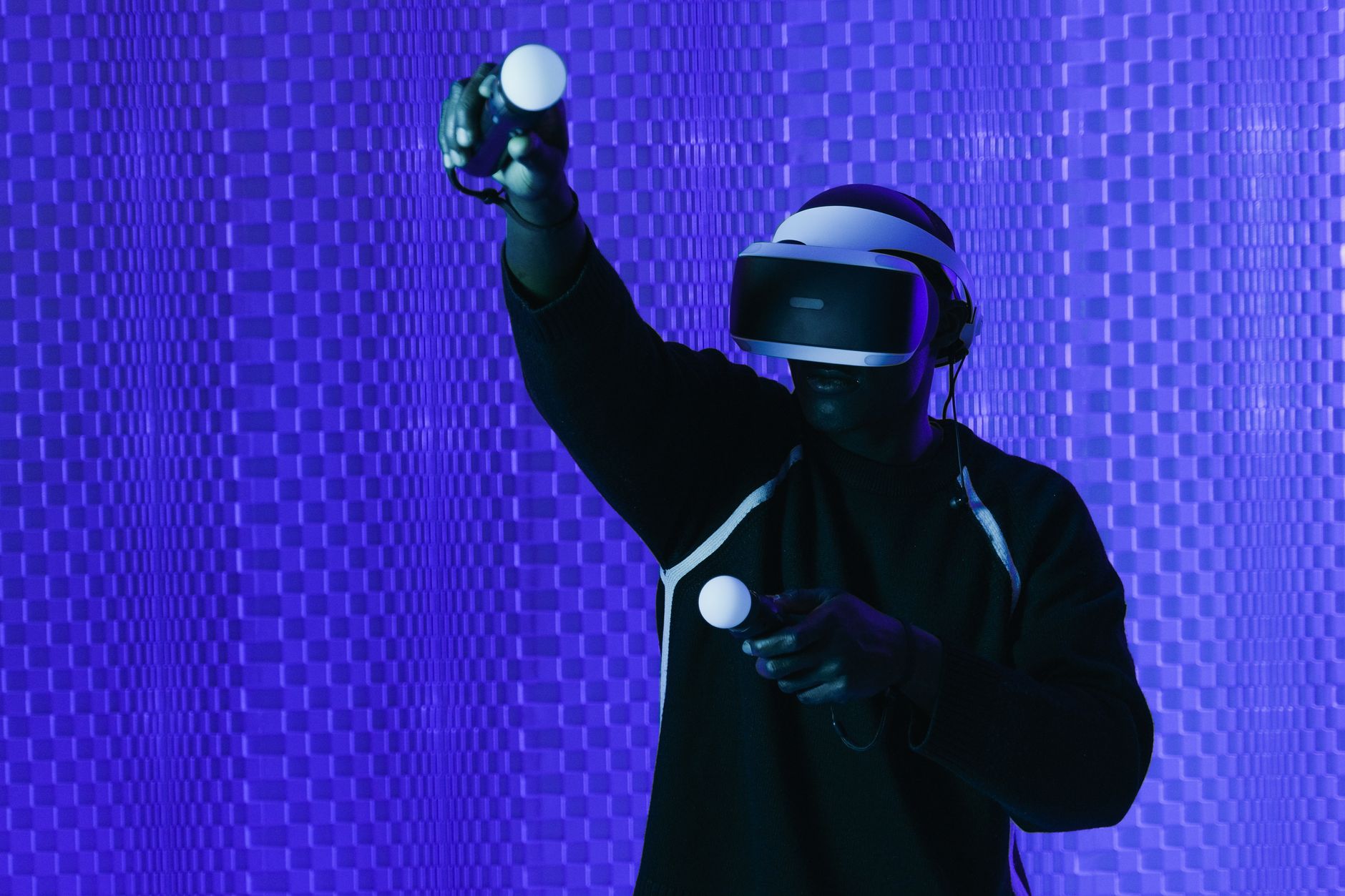
 Photo: SHVETS production / Pexels
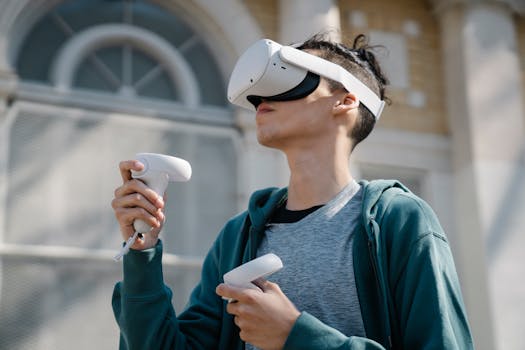 Photo: Eren Li / Pexels
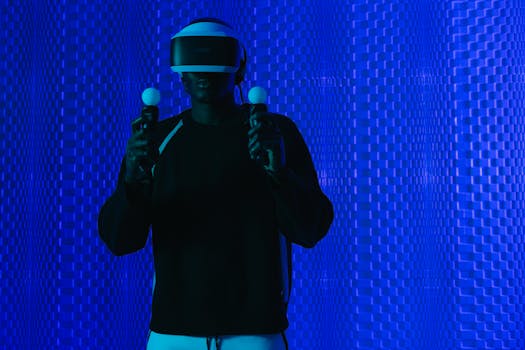 Photo: SHVETS production / Pexels